

Bi-Weekly Newsletter · Dmitry Dragilev · Issue 13
I’ve spent most of this year researching how to rank in Google AI and ChatGPT answers.
On August 14th, 2026, something changed in the way ChatGPT generates answers, and I think most people are misreading what’s happening.
ChatGPT has almost stopped citing Reddit, YouTube, TikTok and Facebook. Instead, it adds brand names to the query you give it, then cites those brands’ own sites in the final answer.
Behind the scenes, ChatGPT builds a shortlist of brands associated with your query. Each shortlist averages 5–6 brands.
To get cited in ChatGPT’s final answer, your job as a brand is to know:
Which prompts produce shortlists of brands
Which brands earn placements in those shortlists, and how often
What ChatGPT says each brand is “best for”
Which pages those shortlists cite
It’s still early days and the competition is relatively weak. ChatGPT’s search index is still filling up, and OpenAI hasn’t had time to build defenses against manipulation.
I’m not saying it’s Google in 2000, but I’m seeing similarities.
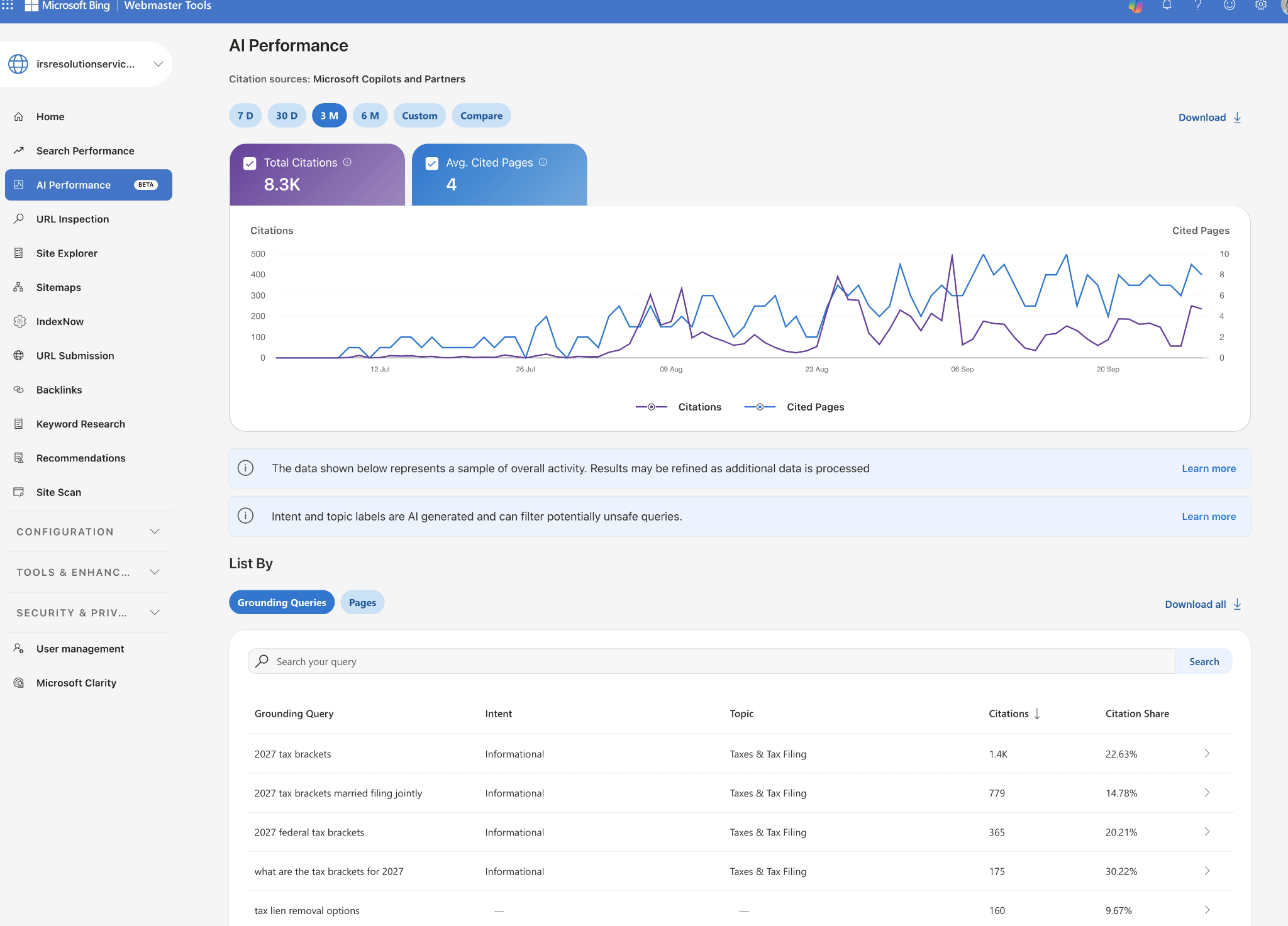
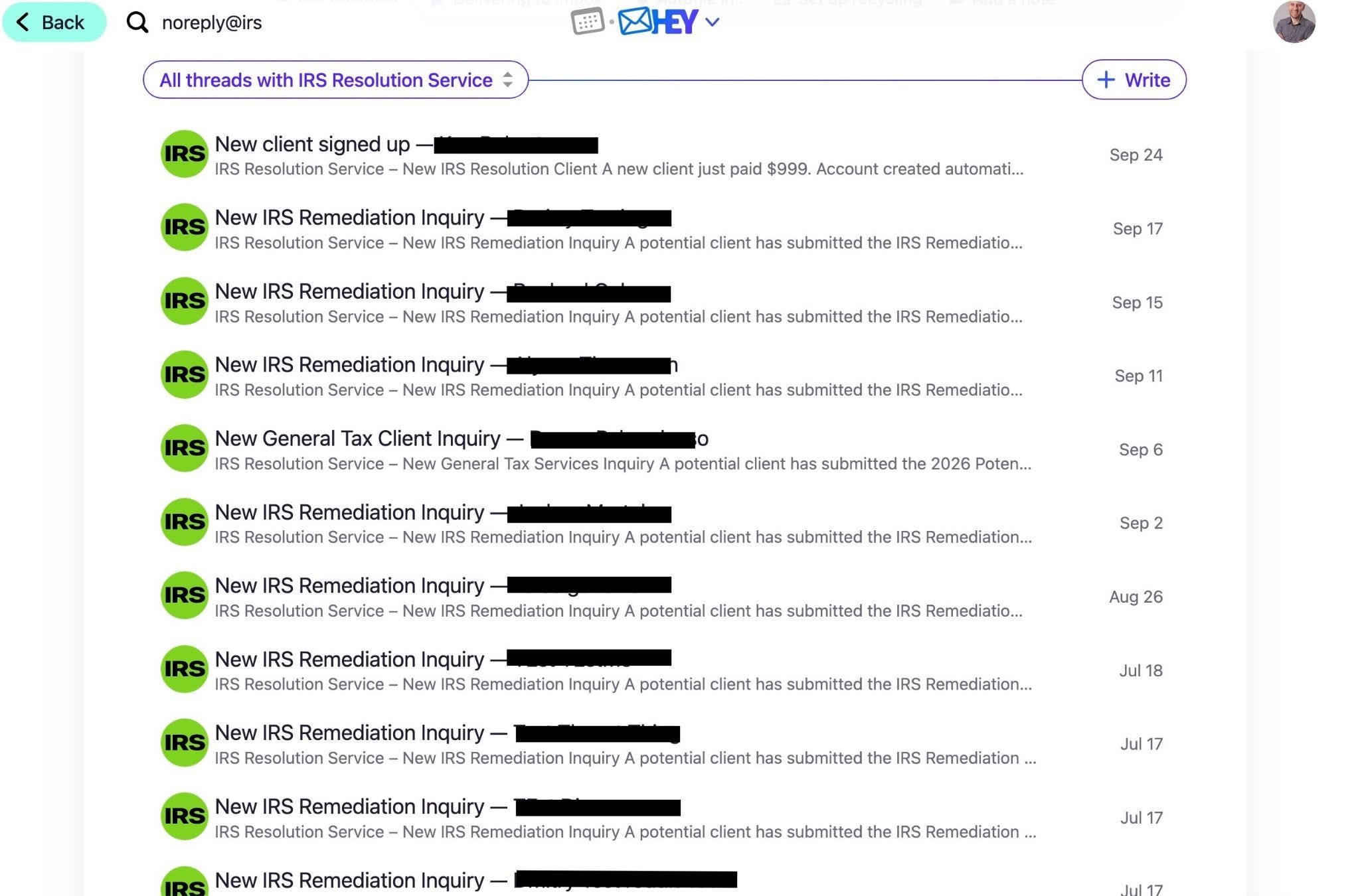
In July 2026 I launched a brand-new site in the tax resolution space, irsresolutionservice.com, with 25 pieces of content. It has zero backlinks and no domain authority and it’s already getting cited in ChatGPT answers, Bing AI, Google AI and sending me leads. We are not running any other promotional campaigns. Here’s a screenshot of citations from Bing webmaster tools and leads contacting us through the site’s contact form:
In this issue:
What is ChatGPT’s cached offline index?
What is a ChatGPT shortlist?
Why ChatGPT stopped citing Reddit and YouTube
How to check which brands are in shortlists
How to find shortlists your brand can break into
My own experiment optimizing for ChatGPT
🗄️ What Is ChatGPT’s Cached Offline Index?
A cached index is a saved copy of the web stored on a company’s own servers. Instead of going out to the internet for every question, the company crawls pages ahead of time, stores them, and searches that saved library when you ask something.
Think of a library versus running around town. Right now, ChatGPT mostly runs around town: it fetches pages live for each question, and that costs money every time. Google already has the library, built over 25+ years, which is why its AI answers are fast and cheap. OpenAI wants one too, and the “offline web search” setting is ChatGPT pulling from OpenAI’s stored copy instead of searching live.
The logic is simple efficiency. If 51,000 people ask something that pulls from the same Reddit thread or article in one day, fetching that page 51,000 times makes no sense. Fetch it once, save it, reuse it, and refresh it every so often or when it changes.
Why it matters: a library only holds what’s on its shelves. If OpenAI decides what goes on the shelves and you’re not included, you won’t show up in the answer.
What OpenAI said under oath
How do we know the index is one of OpenAI’s top priorities?
During the Google antitrust trial in April 2025, Nick Turley, OpenAI VP and Head of ChatGPT, testified that the goal is to have 80% of ChatGPT’s responses come from OpenAI’s own first-party index (court transcript here).
Fast forward to April 2026: OpenAI’s own help center says users can select an offline web search mode, which uses OpenAI’s cached web content.
So the beta version of the offline index is here.
📋 What Is a ChatGPT Shortlist?
ChatGPT Search is now built into ChatGPT. When you ask about something current, like news, prices or product recommendations, it runs web searches and writes an answer with citations. It launched in late 2024, leaning heavily on outside search providers like Bing.
What changed on August 14, 2026
On August 14, 2026, SEO/GEO/AEO researchers all saw ChatGPT’s citations of Reddit, YouTube, TikTok and Facebook drop sharply:
Promptwatch measured Reddit’s share falling from 3.83% of citations (July 18–Aug 7) to 0.52% (Aug 14–17), an 86.4% drop. It happened in two steps, on Aug 8 and Aug 14. Source: Search Engine Land, Aug 19, 2026.
Petra Labs measured about an 81% drop for Reddit, with YouTube down 88%, TikTok 72%, LinkedIn 36% and Facebook 28%. Source: Inc. Magazine, Aug 20, 2026.
Google’s AI Overviews declined only gradually, from about 2.5% to 2.1%, so this was specific to ChatGPT. Source: Search Engine Land, Aug 19, 2026.
As researchers dug in, the best-supported explanation was a change in how ChatGPT builds its searches. Instead of leaning on Reddit, Facebook, YouTube and TikTok, ChatGPT uses its own cached index to find a shortlist of brands, then appends those brands to the query to find higher-quality information.
On August 17th, 2026, Suganthan Mohanadasan published a study showing that ChatGPT adds specific brand names to the query a user types, without the user asking for them.
These are shortlists.
If I enter the following prompt into ChatGPT “what is the best running shoe for long distance,” ChatGPT already knows Nike, Adidas, ASICS and Hoka are top brands in this space, so it injects these brands into a hidden shortlist which gets added to the original prompt behind the scenes. (I’ll show you how to check this later on in this newsletter)
This same study also found that the final answer ChatGPT produces pulls from the brands in the shortlists websites 68.9% of the time.
Shortlist example: asking for the best note-taking app
Before August 14, 2026 (broad search)
User types: “best note taking apps”
ChatGPT searched for “best note taking apps,” got back a mix of results — app sites like Notion and Evernote, Reddit threads, YouTube reviews, blog posts — and cited a combination of all of them.
Now (shortlist first)
User types: “best note taking apps”
If the query is about brands or products, ChatGPT uses its own index to find the brands most associated with it and appends that list to the query.
The new query becomes:
Prompt: best AI note-taking apps 2026 official pricing Granola Notion AI Otter Fireflies Fathom
The user never typed those brand names. Through pattern recognition, ChatGPT found that “AI note-taking apps” is closely associated with Granola, Notion, Otter, Fireflies and Fathom, so it added them.
Then ChatGPT runs one targeted search per brand, such as site:granola.ai pricing and site:otter.ai pricing. The site: part tells a search engine to look only inside that one website.
With the answers coming from each company’s own pages, there’s little room left for secondhand input from Reddit threads or YouTube videos.
Here’s a real example with a more nuanced question:
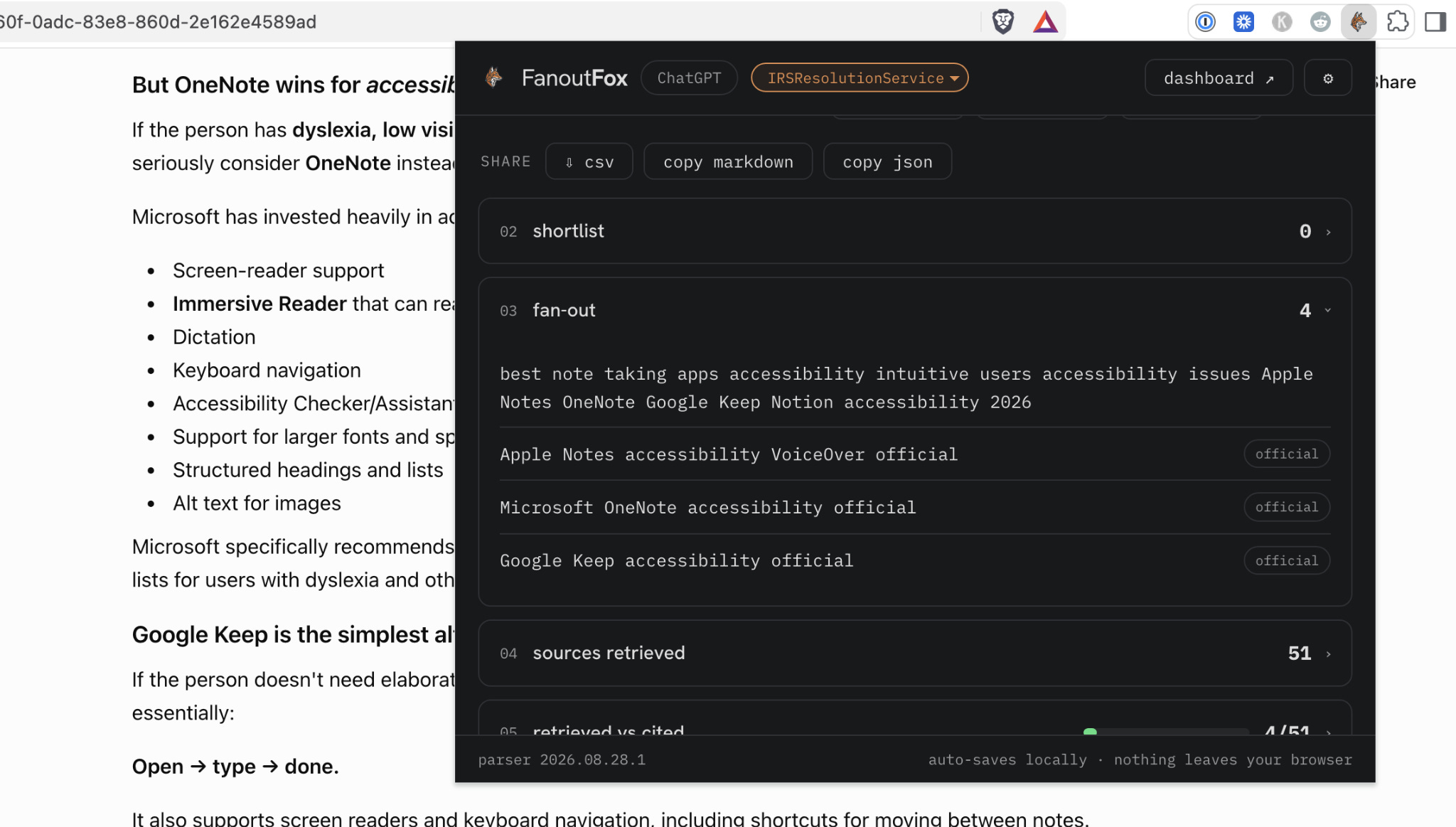
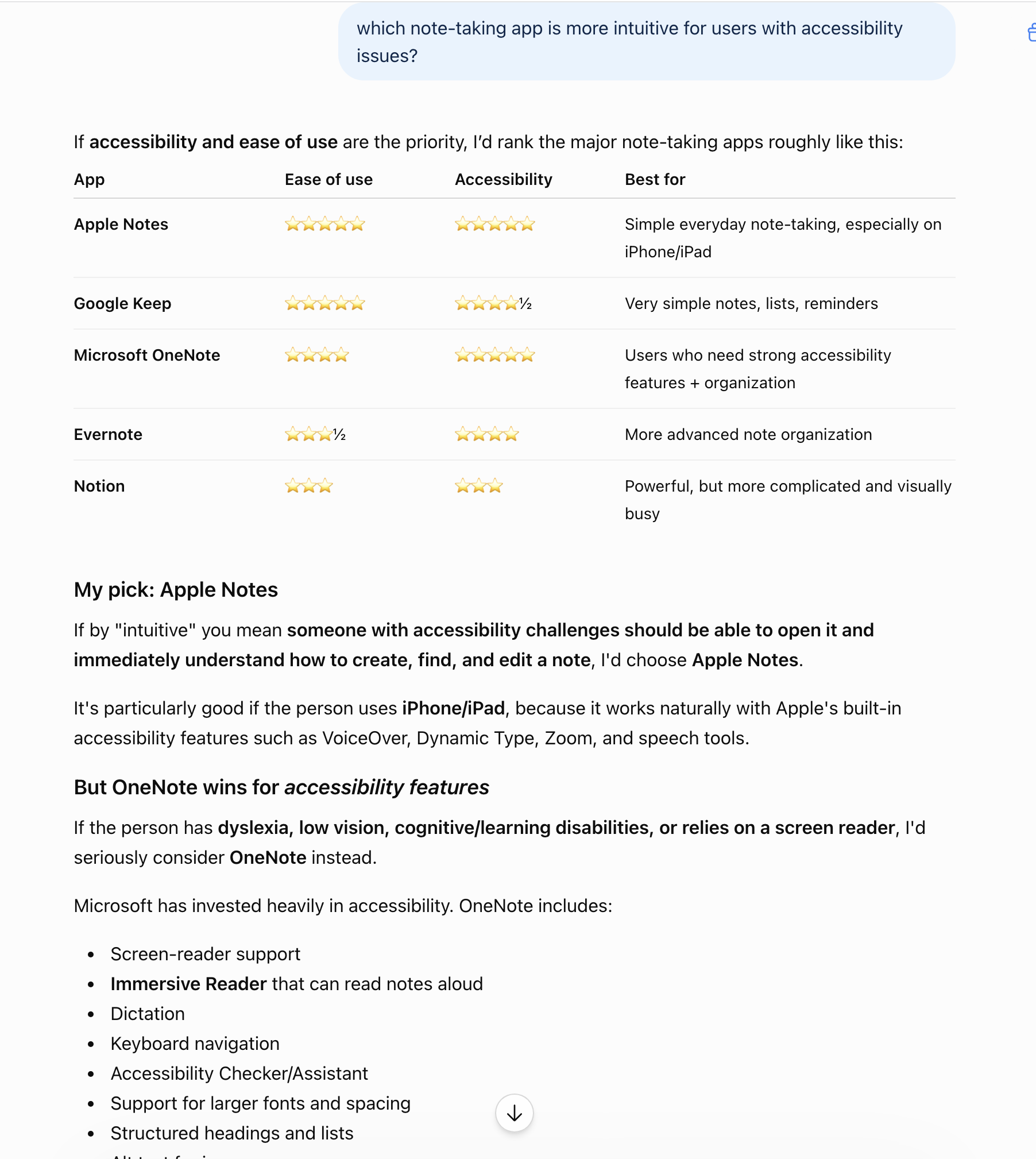
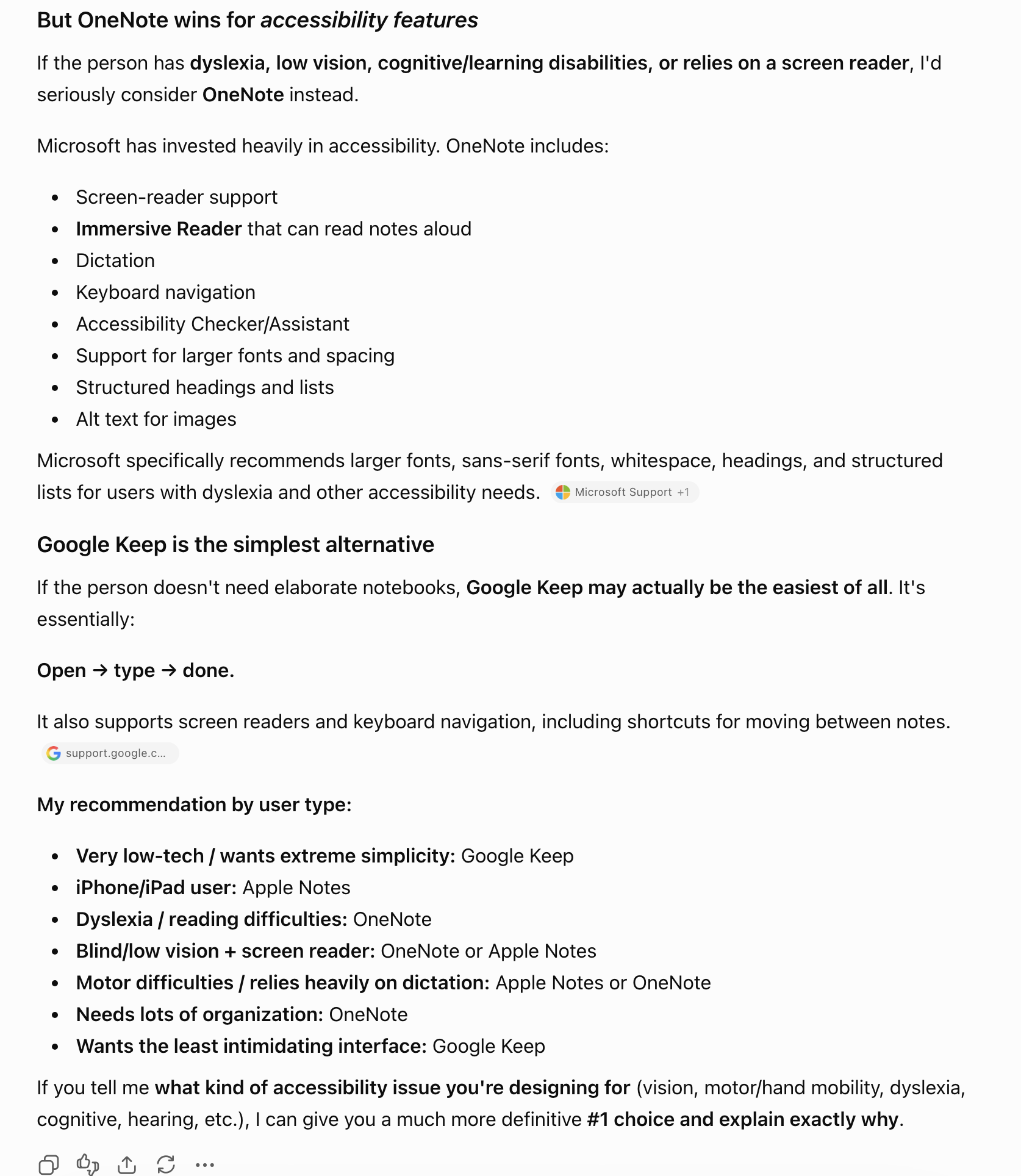
Prompt: Which note-taking app is more intuitive for users with accessibility issues?
Using FanoutFox, we can see which brands were injected into the fan-out: Apple Notes, OneNote, Google Keep and Notion.
Check out the brands the final answer lists:
Finally look closely at the citations listed in the answer, it’s relying on Microsoft and Google sites to cite the answer (the same brands being added to the shortlist):
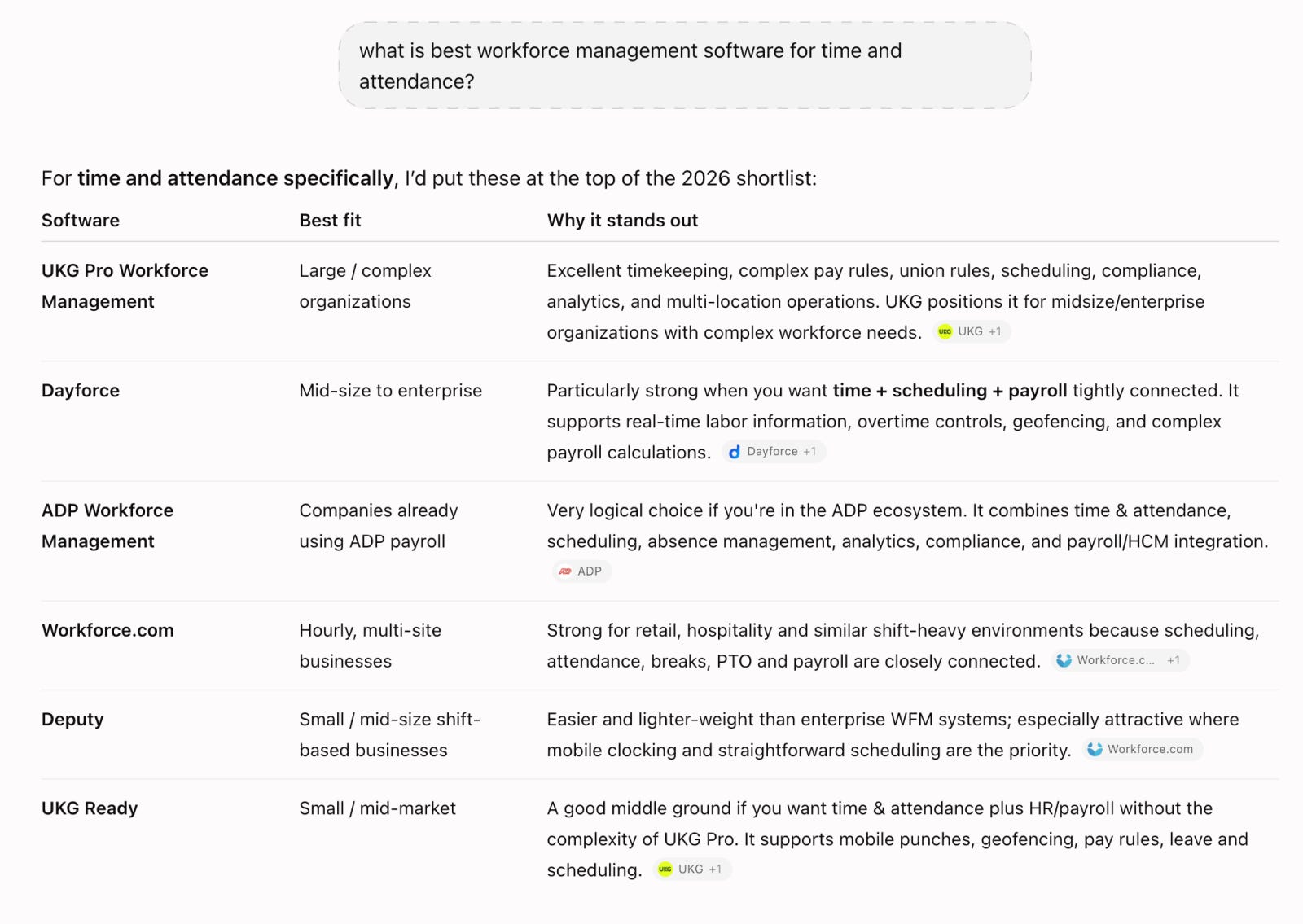
One more example, from a Search Engine Land article titled ChatGPT shortlists: How to benchmark visibility and find room to compete. Notice the question has no brand names in it, yet each software company is cited directly in the answer:
The evidence
Site-specific searches jumped. Searches using the site: operator reportedly rose from 0.4% to nearly 17% of ChatGPT’s queries on Aug 8. Help centers and product documentation picked up most of the citations Reddit and others lost.
Being named early made a huge difference. Suganthan found that when ChatGPT wrote a brand into its own first search, that brand reached the final answer 68.9% of the time. In other words, if ChatGPT decides on its own to search site:notion.com for your note-taking question, Notion shows up in the answer about 69% of the time.
Not being named had the opposite effect. Brands ChatGPT didn’t write into its searches made the final answer only 2.1% of the time. If you’re not on the shortlist, you’re mostly not in the answer.
🚫 Why ChatGPT Stopped Citing Reddit, YouTube and TikTok
Think of it like shopping. Before, ChatGPT wandered the whole mall asking shoppers (Reddit, YouTube, TikTok) what they thought. Now it walks into the three stores it already had in mind and reads their information directly. The shoppers still exist, but ChatGPT isn’t stopping to ask them.
This is the leading theory, not a confirmed one. Promptwatch says its data shows when the shift happened, not why.
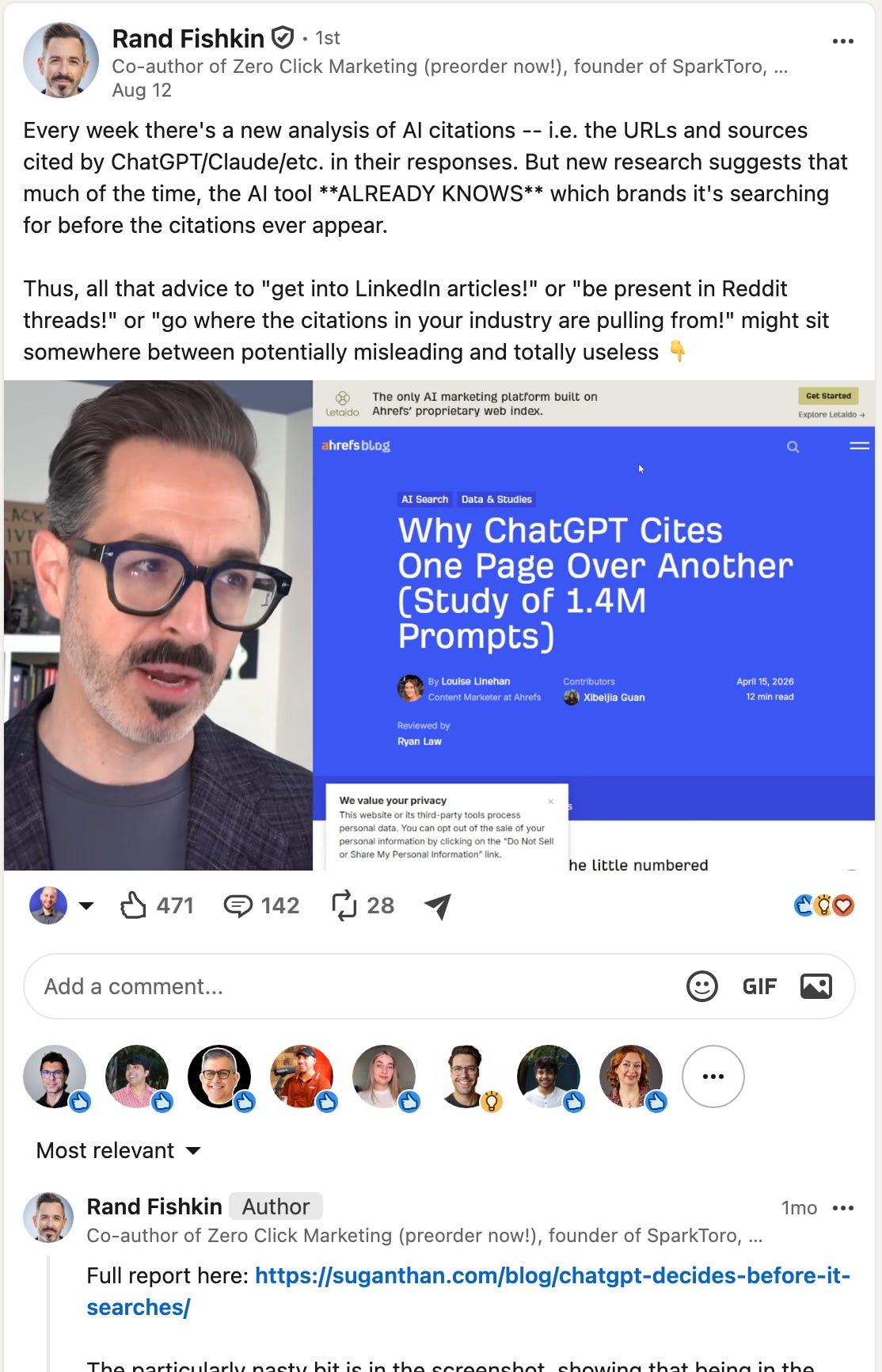
Rand Fishkin, one of the most prominent voices in SEO, had a great take on this study:
Read Rand’s full post on LinkedIn →
Read Rand’s full post on LinkedIn →
🔍 How To Check Which Brands Are in Shortlists
I spent most of September trying to figure out how ChatGPT decides which brands to add to a query, and this is the first thing that let me actually see it instead of guessing.
Here’s the test I run. A first pass takes about 30 minutes.
I use a free Chrome extension called FanoutFox which does not require an account. It was built by Suganthan Mohanadasan for analyzing AI search behaviors. (you might know another tool he built, KeywordsInsights). I have no affiliate relationship with him. You can do the same thing yourself with Chrome DevTools, using “Inspect” while you run ChatGPT, but FanoutFox makes it much easier.
Stick to these prompt types. They work best because they’re most likely to have brands in shortlists injected into the prompt:
“Best [category]” prompts — e.g. “best e-readers for kids”
“Alternative to” prompts — e.g. “alternative to QuickBooks”
Brand vs. brand comparisons — e.g. “Notion vs. Monday”
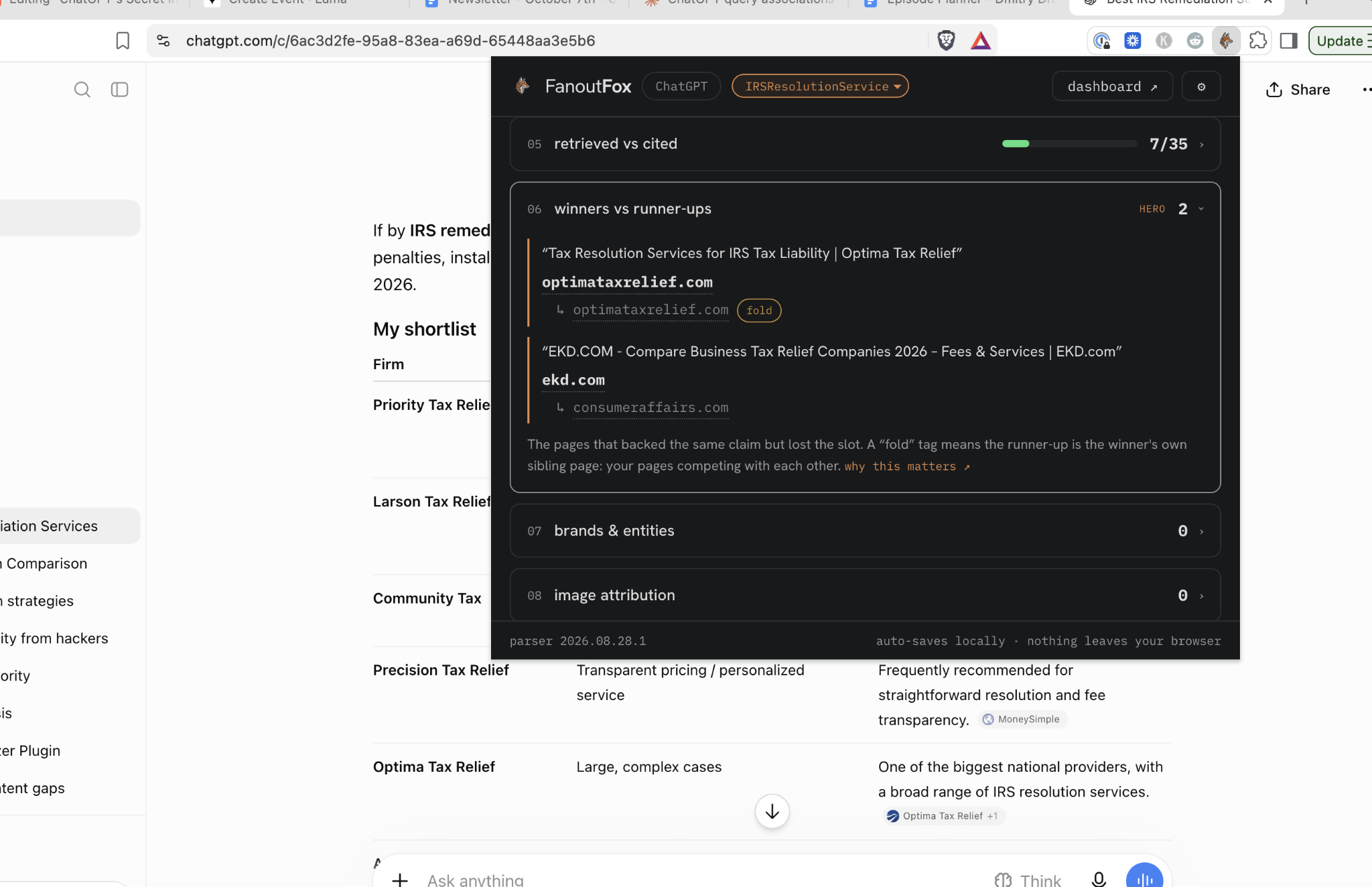
The tool shows you the shortlist of brands for each answer.
Here’s what I got for prompt “best alternative IRS remediation services.” Optima Tax Relief showed up on the shortlist consistently:
🎯 Finding the Shortlists Your Brand Can Break Into
My biggest advice for a younger brand trying to get onto a ChatGPT shortlist: do the research first.
Start by choosing a shortlist topic, and look for openings in product-adjacent mentions. Ask:
Which brands does ChatGPT name in its fan-out queries?
Of those, which brands make the final shortlist?
Which pages get cited for the shortlisted brands?
What type of content is ChatGPT citing, and which sites publish it?
The answers show you the holes and topics you can break into.
🧪 My Own AEO Experiment With ChatGPT
I built a brand-new site in late July: irsresolutionservice.com. No backlinks. No authority. Nothing.
My approach was simple: find ChatGPT prompts where the shortlists had non authoritative brands in them and the information was not backed up by authoritative sources.
I picked 25 specific prompts in the IRS tax resolution space and went after them. The real focus was specific content gaps in ChatGPT’s answers and holes in shortlists.
For most of my prompts, the “shortlist” had mainly the IRS itself, plus a few independent CPA and accounting firms.
Those independent CPA firms were my target, a lot of them were one or two person practices with not much citations, the domains were not authoritative, the content was very outdated and general.
Once I had the topics, the prompts and the shortlist for each, I needed to find the actual content gaps in ChatGPT’s current answers. For that I used LLM Gap Analyzer (full disclosure: that’s my app). Here’s the process:
My partner Romeo Razi (one of the best CPAs out there who actually worked at IRS as an examiner) publishes a bi-weekly newsletter on IRS resolution and financial topics. It’s engaging and insightful content. I pulled his 25 most-read issues of the newsletter.
I created a ChatGPT prompt for each issue’s main topic.
I ran those newsletters with each prompt through LLM Gap Analyzer to find which prompts gave a ChatGPT or Google AI answer with factual inaccuracies, outdated information, non-cited claims and other gaps.
I wrote new articles on the IRSresolutionservice.com focused on the content gaps I was able to find in step 3.
I re-ran each article through LLM Gap Analyzer to keep searching for new content gaps every three days.
From there it’s the same loop: re-run the prompts, find a gap, fill it with better content, repeat. It’s a ton of work.
I did this through August and September 2026. Here’s where it stands as of October 7, 2026:
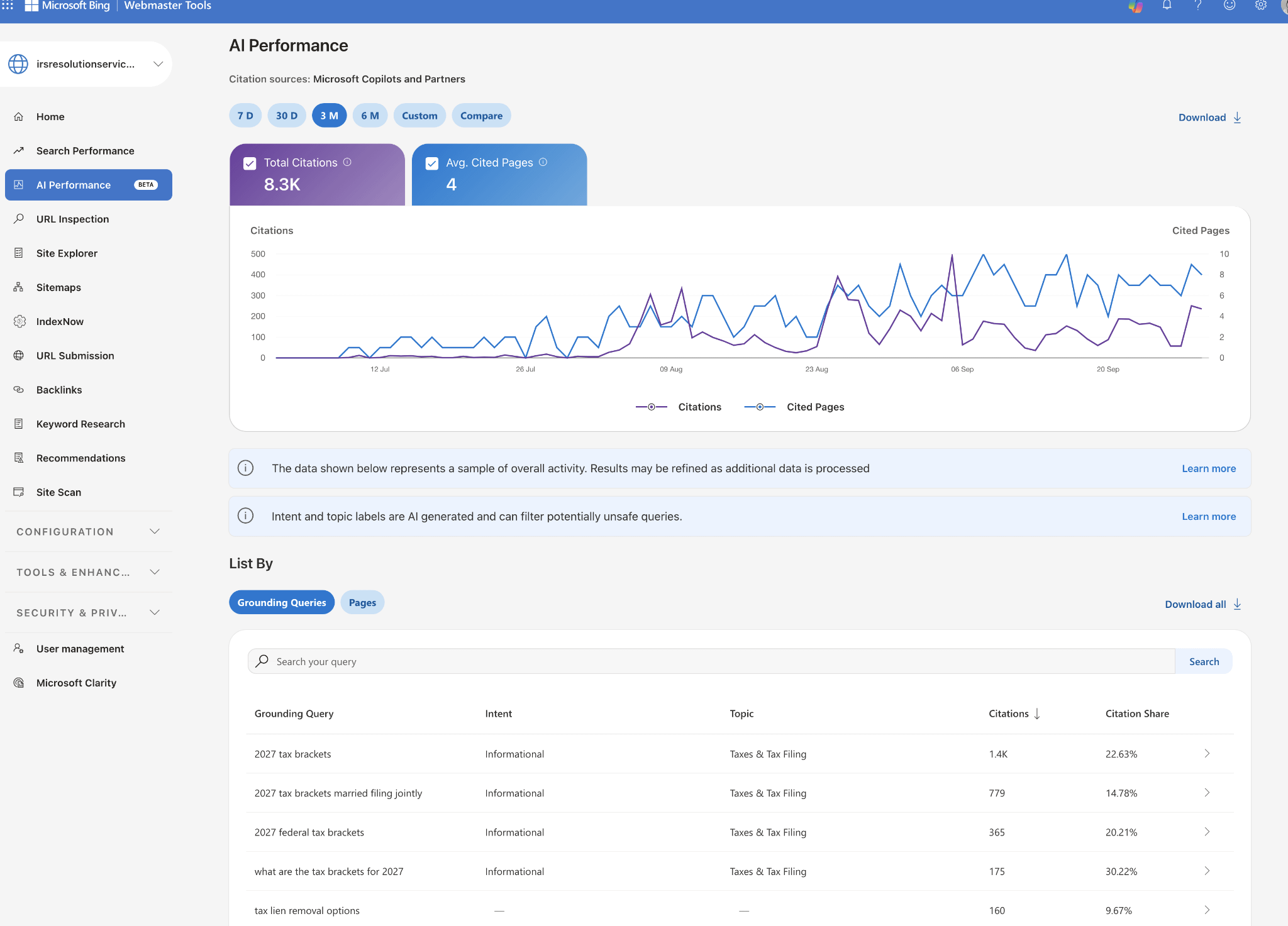
300–400 citations a day in Bing’s AI Performance report [screenshot]
150+ citations a day in Google Search Console [screenshot]
Leads every week from people who found us through ChatGPT
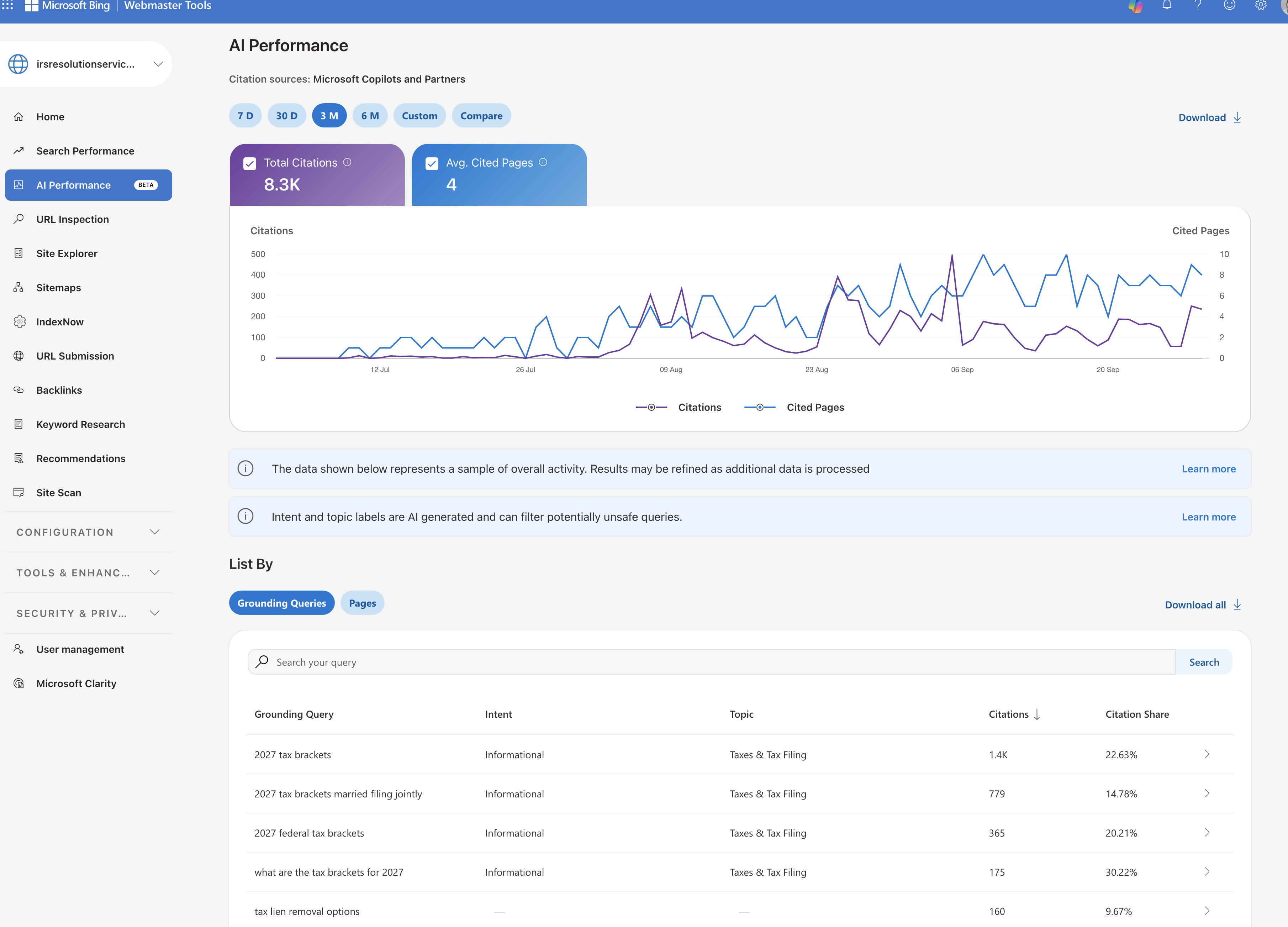
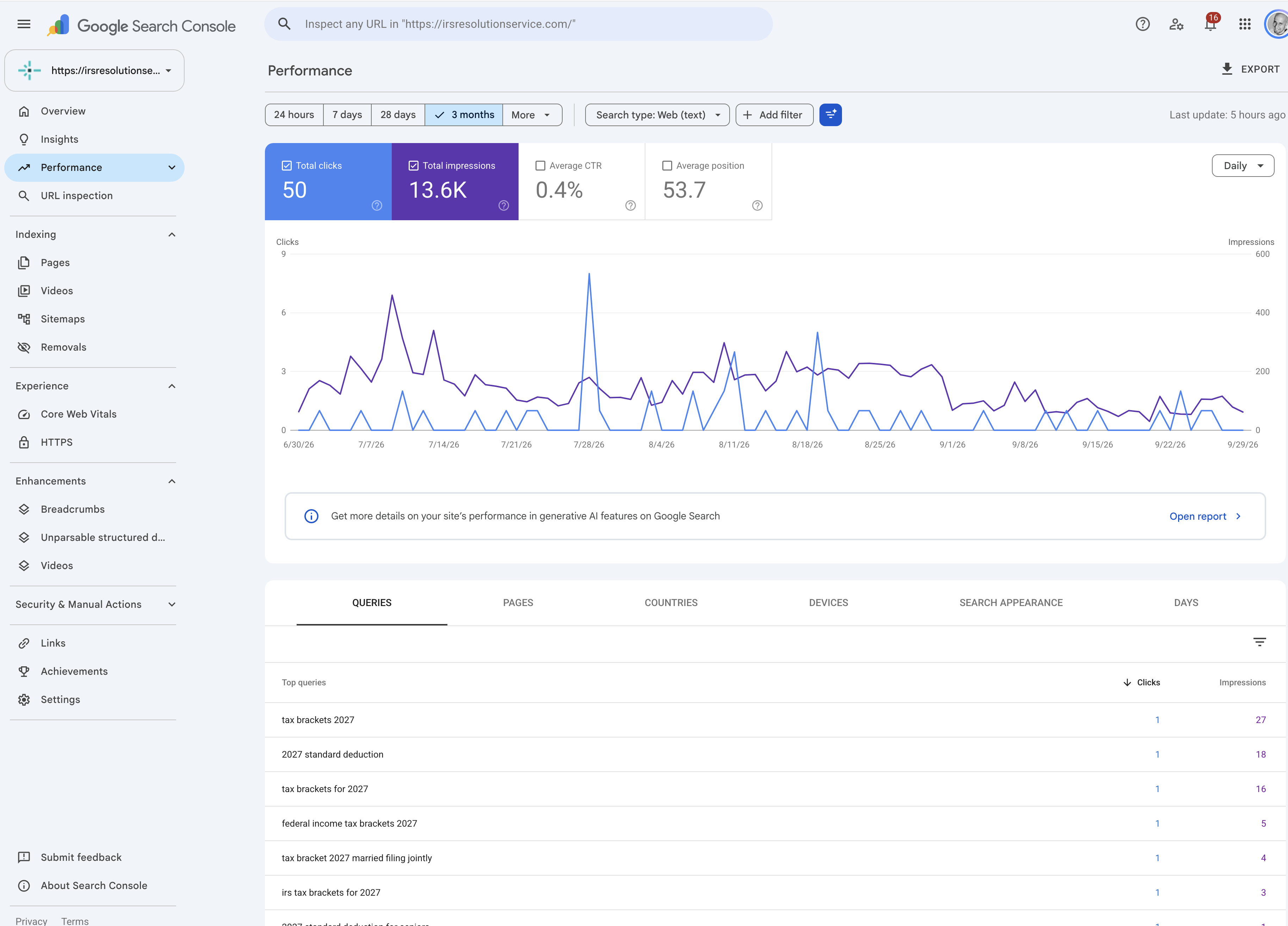
Pages getting picked up the most are: /irs-tax-lien and /tax-brackets-2027.
What those numbers mean, and don’t
“Citations” here means how often my pages show up as a source in AI answers on that platform. Bing’s and Google’s reports measure different things, so don’t add them together. Neither captures clicks or ChatGPT citations. They’re signals, not proof of traffic.
The ChatGPT leads are self-reported: our contact form asks where people found us (ChatGPT, Google, etc.).
I know this is not perfect reporting but as long as I see leads flowing in, I’m happy!
The wild part
My first guess was that ChatGPT leans on Bing’s index, which would fit my strong Bing numbers. That used to be the standard answer. But 2026 research from Peec AI shows ChatGPT now has its own index, with Google and Microsoft as only some of its sources, and OpenAI is already testing it against third-party results on a slice of chats. So I can’t tie my results to Bing.
Chatgpt brand shortlists and ChatGPT offline cache search is the future.
Keep this in perspective
This is one site and a few months of data. It’s not a guaranteed playbook, and I’d be careful with anyone who sells it as one. The experiment is still running.
But if a site with zero links can get picked up before OpenAI’s index fully launches, I think it gets even more interesting once it does.
Here are the things every brand should be asking themselves right now:
Which prompts produce shortlists of brands
Which brands earn placements in those shortlists, and how often
What ChatGPT says each brand is “best for”
Which pages those shortlists cite
💬 Your Turn
Have you run a similar experiment on a new site? I want to hear about it. Hit contact on criminallyprolific.com and tell me.
I’ll be back in 2–3 weeks with the next issue.
— Dmitry
Love seeing little thoughts like this on my feed 🫶
Amazing stuff! Will try this on my (bit older) website and report on that!